

Welcome to the SLMN Blog

Shandong Linmo CNC Machine Tool Equipment Co., Ltd.
Insights, Tips, and More from SLMN CNC Machine Tools

How to Choose the Right High Speed Machining Center for Your Needs?

Choosing the right High Speed Machining Center is crucial for manufacturing success. In recent years, the demand for precision parts has increased dramatically. A report by industry analysts highlights that the global machining center market is expected to reach $100 billion by 2025. This growth is driven by the need for high efficiency and reduced production times.

Selecting a High Speed Machining Center involves understanding your specific needs. Factors like material type, product complexity, and desired accuracy play a significant role. Many businesses overlook these details, leading to inefficient operations. For instance, a center that excels in high-speed aluminum cutting may not perform well with harder materials.

The right choice can enhance productivity. However, each machine has unique capabilities. Investing in a low-quality machine can halt production and waste resources. It is vital to assess your workflow and future demands. Ultimately, a well-chosen High Speed Machining Center should integrate seamlessly into your production line. Reflecting on these factors can lead to informed decisions and long-term benefits.
How to Choose the Right High Speed Machining Center for Your Needs?

Understanding High Speed Machining Centers: Key Features to Consider

When selecting a high-speed machining center, understanding key features is crucial. These centers primarily enhance precision. According to a recent industry report, a 5% increase in precision can lead to a 20% reduction in manufacturing costs. This is significant for competitive pricing.

Consider the spindle speed. Many centers offer speeds exceeding 20,000 RPM. Higher speeds can improve material removal rates. However, they may come with increased wear and tear. This requires careful maintenance planning. Additionally, look at the tool change time. Equipment with faster change times can reduce cycle time, directly impacting production efficiency.

Another factor is the machine size. Space constraints can limit options. A mismatch between machine size and workshop layout can lead to inefficiency. Lastly, software compatibility is vital. Many modern centers rely on advanced software for optimized performance. Ensure your existing systems can integrate seamlessly. Reflecting on these aspects can help avoid costly mistakes in your investment journey.

Assessing Your Production Needs: Evaluating Workpiece Materials and Size

How to Choose the Right High Speed Machining Center for Your Needs?

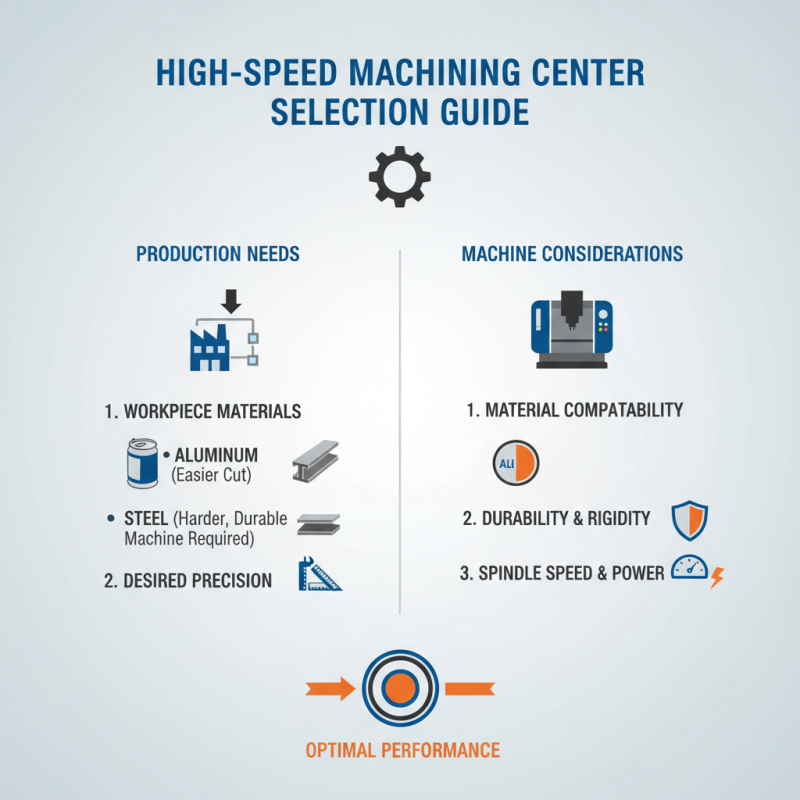
Choosing the right high-speed machining center hinges significantly on your production needs. Evaluating workpiece materials is critical. Different materials behave differently under machining processes. For example, aluminum is easier to cut compared to steel. If you're working with harder materials, consider a machine designed for durability and precision.

Workpiece size must also factor into your decision. Larger parts require machines with extended travel ranges. Small components might only need a compact space. Think about your current and future projects. Some may not fit within your planned parameters. Take a moment to reassess your workspace limitations and workflow efficiency.

Don’t overlook the importance of versatility. A machine should handle a variety of materials and sizes. However, focusing too much on one aspect can lead to regret. Sometimes, machines touted for their capabilities may not meet real-life demands. Ensure you’re not just chasing features without considering practical application. Reflect on past projects to guide your choice wisely.

Machining Center Types: Vertical vs. Horizontal Options Explained

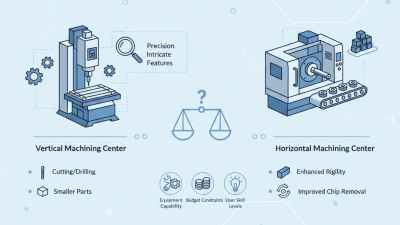
When choosing a high-speed machining center, the type can make a significant difference. Vertical machining centers are commonly used for precise operations. They are excellent for detailed work on smaller parts. The spindle is oriented vertically, allowing tools to approach the workpiece from above. This setup enhances visibility and access for the operator.

On the other hand, horizontal machining centers are designed for larger, heavier components. They have a horizontal spindle, providing a different approach for cutting. This orientation can be advantageous for deep cuts or heavy materials. However, visibility can be limited compared to vertical options. It's essential to consider the type and size of parts you will work on.

Embedded features may differ between these two types, impacting efficiency. For instance, vertical centers often allow for faster tool changes, but horizontal models might offer better coolant flow for chip removal. Reflecting on these aspects can help you align your choice with your specific production needs. Ultimately, it’s a balance between speed, accuracy, and the nature of your projects.

Evaluating Control Systems: CNC vs. Conventional Controls

When considering high-speed machining centers, control systems play a crucial role. Two primary types exist: CNC and conventional controls. CNC systems provide automation and precision. They excel in high-tolerance applications. Imagine a machine that can run multiple programs simultaneously. This can significantly boost productivity. However, setting up a CNC system may require a learning curve.

On the other hand, conventional controls offer a hands-on approach. Operators have direct oversight. This can be beneficial for complex or unique tasks. The human touch can sometimes bring a creativity that machines lack. Yet, this system may lead to inconsistency in performance. Operators need to be highly skilled to achieve quality results.

Evaluating your specific manufacturing needs is essential. Ask yourself, what are your production goals? Do you need speed or accuracy? Reflecting on this can guide your choice. Both systems have their merits and challenges. Your decision should align with your operational philosophy. Finding the right balance will significantly impact your machining efficiency.

Budget Considerations: Cost vs. Performance in High Speed Machining

How to Choose the Right High Speed Machining Center for Your Needs?

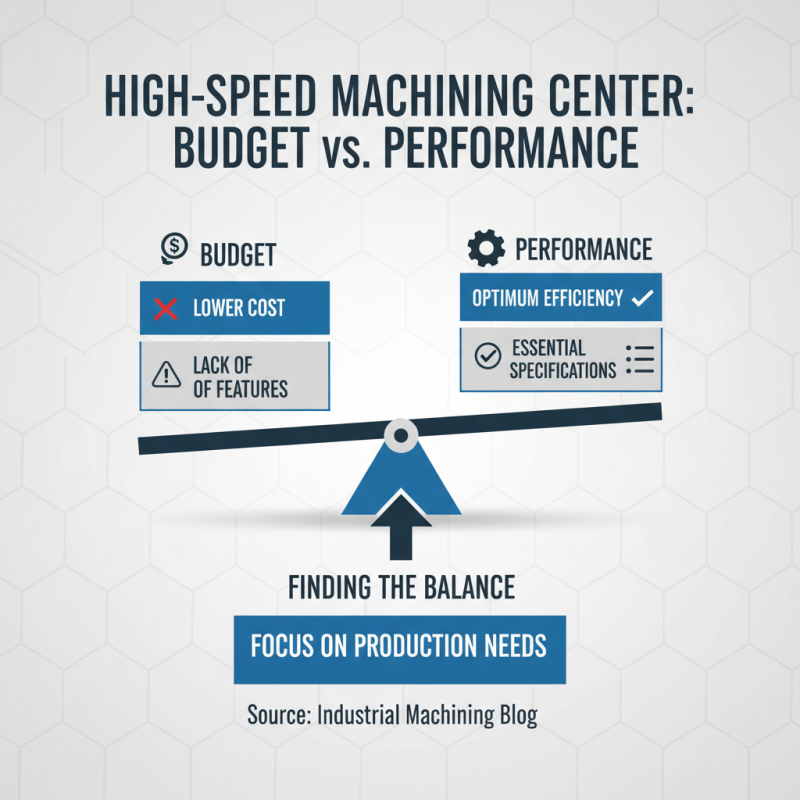
When selecting a high-speed machining center, balancing budget with performance is crucial. A cheaper machine may seem attractive. However, it might lack essential features. Focus on your production needs. Determine what specifications you require for optimum efficiency.

Tips: Consider future upgrades. Some machines may start slow but allow scalability. Think about long-term investment rather than just the immediate price.

Evaluate the cost of consumables and maintenance as well. A low upfront cost can lead to high long-term expenses. Analyze the total cost of ownership. It reveals a machine’s real impact on your finances. Always compare performance metrics too. A powerful machine may operate slower but improve overall quality.

Tips: Keep an open mind to lesser-known models. They might offer great value without the premium price tag. Conduct thorough research before making a decision. Reflect on your specific needs and the type of work you do. Align this with your budget for the best results.

  • Address

    North of Industrial Road, Linqing Economic Development Zone,Liaocheng City, Shandong Province, China

  • Email

    info@lucimagnet.com

  • Phone/WhatsApp

    Angela:0086-13884742546
    Eric: 0086-15688878114

Get in touch with SLMN today. Whether you have questions about our CNC machine tools , or are interested in becoming a distributor, our team is ready to assist you.

© 2025 Shandong Linmo CNC Machine tool Equipment Co.,Ltd. All Rights Reserved.
Privacy Statement Terms & Conditions Sitemap Top Blog

© 2025 Shandong Linmo CNC Machine tool Equipment Co.,Ltd. All Rights Reserved.
Privacy Terms & Conditions Sitemap Top Blog