

Welcome to the SLMN Blog

Shandong Linmo CNC Machine Tool Equipment Co., Ltd.
Insights, Tips, and More from SLMN CNC Machine Tools

2026 Best 4 Axis CNC Vertical Machining Center for Sale?

The 2026 market for a 4 Axis Cnc Vertical Machining Center is becoming more competitive. Buyers now compare spindle speed, rotary-axis accuracy, control software, and after-sales support. Fortune Business Insights valued the global CNC machine market at approximately USD 83.99 billion in 2023. Its report projects continued growth through 2032, driven by aerospace, automotive, medical, and precision-engineering demand. Grand View Research also identifies automation and higher machining accuracy as major market drivers.

The machine is only part of the decision. A reliable 4 Axis Cnc Vertical Machining Center should reduce setups, improve access to multiple surfaces, and maintain repeatable positioning under production pressure. Look closely at the rotary table diameter, payload rating, indexing resolution, thermal compensation, and controller compatibility. Ask for test-cut evidence. Demand service response times. Small details matter.

Yoram Koren, a recognized authority in reconfigurable manufacturing systems, wrote, “The main objective of a reconfigurable manufacturing system is to provide exactly the functionality and capacity needed, exactly when needed.” That principle remains useful when evaluating machines for sale in 2026. More axes do not automatically create more profit. Tooling, operator skill, programming quality, and fixture design still determine results. A spreadsheet can mislead. A showroom demonstration can also look perfect. Real production data is stronger evidence. This guide examines practical specifications, ownership costs, supplier credibility, and application fit, helping buyers separate useful capability from expensive complexity.
2026 Best 4 Axis CNC Vertical Machining Center for Sale?

What Is a 4-Axis CNC Vertical Machining Center?

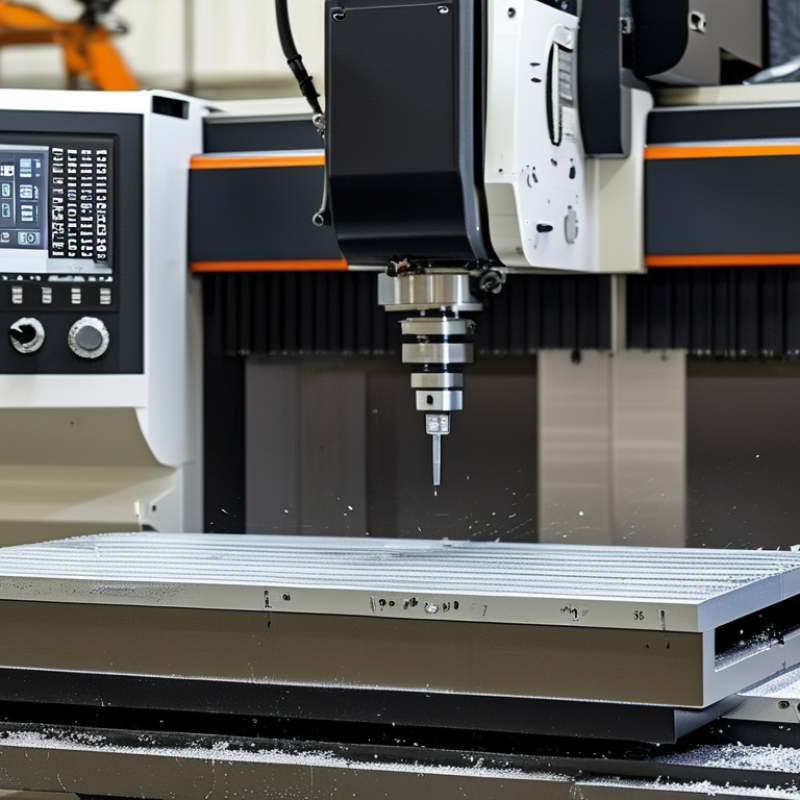
A 4-axis CNC vertical machining center is a three-axis milling machine with one rotary axis. The added axis usually rotates the workpiece around the X, Y, or Z direction. This allows operators to machine several faces without removing the part. Think of a shaft held in a rotary table. The cutter can reach its side, end, and angled features through controlled rotation.

The fourth axis may work in indexed or simultaneous mode. Indexed machining stops rotation before cutting, while simultaneous control coordinates rotation with linear movement. This distinction matters. A 4-axis center is not automatically a 5-axis machine. It may still struggle with deep undercuts and complex freeform surfaces. In real workshops, setup reduction is often the strongest advantage. Fewer reclamping operations can reduce alignment errors and protect datum accuracy. However, poor fixturing can cancel those benefits quickly.

The CNC Machine Tools Global Market Report 2024 estimated the worldwide market at about 80 billion dollars in 2023, with continued growth expected through 2024. Such forecasts show demand, but they combine many machine categories. Buyers should not treat them as proof of one configuration’s productivity. Check rotary-axis torque, table diameter, spindle speed, work envelope, and post-processor support. A machine may look capable on paper. Actual cycle time can still disappoint. Trial-cut evidence remains more reliable than a brochure.
How Does a 4-Axis CNC Vertical Machining Center Work?

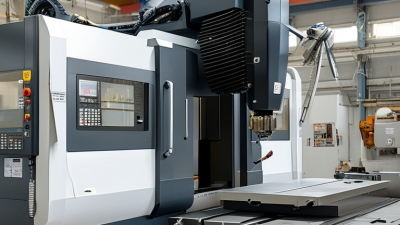
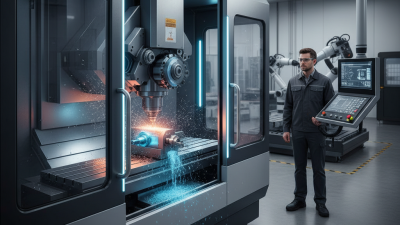
A 4-axis CNC vertical machining center adds rotary movement to the usual X, Y, and Z axes. The fourth axis often rotates around the X axis, although configurations can vary. A workpiece sits on a powered rotary table inside the vertical machining area. The spindle moves vertically and across the table while the rotary axis turns the part to a programmed angle.

It can machine several faces without manual repositioning. That reduces setup time and protects part alignment. In indexed work, the table stops at each angle before cutting begins. In simultaneous work, rotation and cutting occur together. The control system coordinates these movements through calculated toolpaths from CAM software. A touch probe can locate the workpiece and check critical surfaces. Small errors still matter.

A 4-axis CNC machine does not replace careful planning. Tool length, fixture height, and rotary clearance must be checked before production. A tall fixture may cause a collision when the table turns. Poor clamping can also create vibration and tapered walls. Experienced machinists verify the datum, simulate the program, and run a cautious first cycle. The first part is rarely perfect. That is normal, but it deserves analysis.

When reviewing a 2026 4-axis CNC vertical machining center for sale, buyers should examine rotary-table load, positioning accuracy, spindle speed, control functions, and service support. The best choice depends on part size, material, production volume, and required access to multiple surfaces.

2026 Best 4 Axis CNC Vertical Machining Center for Sale? - How Does a 4-Axis CNC Vertical Machining Center Work?

Machine Category Typical X/Y/Z Travel 4th-Axis Configuration Typical Spindle Range Table Size and Load Typical Tool Capacity Recommended Workpieces How the 4-Axis System Works Main Selection Advantage
Compact 4-Axis VMC Approximately 500–800 / 350–500 / 400–550 mm Rotary table or tilting rotary attachment, commonly 100–200 mm diameter 8,000–12,000 rpm; approximately 7.5–15 kW About 600–900 × 300–500 mm; typical load 200–500 kg 16–24 tools Small aluminum, steel, brass, and engineering-plastic parts; fixtures and prototype components The X, Y, and Z axes provide linear cutting motion while the rotary axis turns the workpiece to expose multiple faces or control a continuous angular position. Lower floor-space and tooling cost for small-batch production
General-Purpose 4-Axis VMC Approximately 700–1,000 / 400–600 / 450–650 mm Integrated or table-mounted rotary axis, commonly 160–250 mm diameter 8,000–15,000 rpm; approximately 11–22 kW About 800–1,200 × 400–600 mm; typical load 400–800 kg 20– treinta tools Prismatic parts, pump housings, valve bodies, brackets, manifolds, and medium-sized fixtures The CNC control coordinates rotary-axis angle with linear-axis movement, allowing several sides of a part to be machined in one setup and reducing repositioning errors. Balanced choice for job shops and mixed production
Heavy-Duty 4-Axis VMC Approximately 900–1,500 / 500–800 / 500–800 mm Large torque rotary table, commonly 250–500 mm diameter 6,000–12,000 rpm; approximately 18.5–37 kW About 1,000–1,600 × 500–800 mm; typical load 800–2,000 kg 24–40 tools Cast iron, alloy steel, large housings, industrial components, and heavy prismatic parts The rotary axis positions or indexes heavy workpieces while the spindle performs rigid milling, drilling, tapping, and boring operations from different orientations. Higher rigidity and cutting capacity for difficult materials
High-Speed 4-Axis VMC Approximately 600–1,000 / 400–600 / 400–600 mm High-speed rotary axis, commonly 100–200 mm diameter 12,000–24,000 rpm; approximately 11–30 kW About 700–1,200 × 400–600 mm; typical load 300–800 kg 24–60 tools Aluminum components, molds, electrodes, aerospace parts, and detailed prototypes The fourth axis rotates the part between toolpaths or during synchronized cutting, while the high-speed spindle removes material with small cutters and short stepovers. Shorter cycle times and improved surface finish on light-to-medium cuts
Production-Oriented 4-Axis VMC Approximately 700–1,200 / 450–650 / 450–700 mm Fast indexing rotary table or dual-station rotary fixture, commonly 160–320 mm diameter 8,000–15,000 rpm; approximately 15–30 kW About 800–1,300 × 450–650 mm; typical load 500–1,000 kg 24–48 tools Repeated batches of brackets, flanges, fittings, housings, and automotive or industrial components The rotary axis indexes the workpiece to preset angles, enabling repeatable multi-face machining while the operator or an automated system prepares the next part. Good repeatability and reduced non-cutting time in batch work
Large-Envelope 4-Axis VMC Approximately 1,200–2,000 / 600–1,000 / 600–900 mm Large rotary table or trunnion-style rotary unit, commonly 320–800 mm diameter 6,000–10,000 rpm; approximately 22–45 kW About 1,400–2,200 × 600–1,000 mm; typical load 1,000–3,000 kg 30–60 tools Large frames, structural components, energy-industry parts, and oversized mechanical housings The linear axes reach large work envelopes while the fourth axis rotates or indexes the component, reducing the need for multiple setups on large parts. Suitable for large components that require multi-face access
Typical values are industry reference ranges rather than specifications for a particular manufacturer or brand. Actual performance depends on machine construction, rotary-axis size, control system, workholding, material, cutting tools, and selected options. “Best” should be determined by workpiece dimensions, material, required accuracy, production volume, spindle torque, rotary-axis payload, and total ownership cost.

Key Specifications to Compare Before Buying

2026 Best 4 Axis CNC Vertical Machining Center for Sale?

Key Specifications to Compare Before Buying

A reliable 4-axis CNC vertical machining center should match your parts, materials, and daily workload. Start with the X, Y, and Z travel ranges. Leave clearance for fixtures and tool changes. A machine that barely fits your largest part may create expensive limits later. Check the rotary axis diameter, indexing angle, and maximum load. Confirm whether the table supports your fixture, workpiece, and cutting forces together.

Spindle specifications need practical attention. Compare taper size, maximum speed, rated power, and torque at lower revolutions. Aluminum may need speed, while steel often needs stronger torque. Review positioning accuracy and repeatability separately. A machine might advertise impressive accuracy, but thermal growth can change results during long cycles. Ask for test-cut data, inspection records, and working samples. I once focused too much on rapid movement and underestimated chip evacuation. That decision increased cleaning time every shift.

Tips: Check the control interface, tool capacity, coolant delivery, and chip conveyor. Test accessibility around the rotary axis. Measure noise and vibration during heavy cutting. Ask about service response, spare parts, training, and warranty terms. These details affect ownership costs more than a low purchase price. Also inspect the machine in person when possible. Paint can look perfect while backlash or spindle wear remains hidden. My checklist is useful, but it is not flawless; operators should revise it after real production trials.

Best Applications for 4-Axis CNC Vertical Machining Centers

The best applications for 4-axis CNC vertical machining centers involve parts needing several machining angles. A rotary axis can reposition a component without repeated manual setup. This improves consistency and reduces handling time. It also keeps important features aligned around one centerline.

These machines suit valve bodies, pump housings, flanges, gear components, and compact aluminum enclosures. They perform well on parts with radial holes, curved pockets, and repeated bolt patterns. A fixture maker can machine multiple faces with fewer clamping changes. Small production teams often gain valuable floor space and shorter setup times.

They are also useful for prototype work and mid-volume production. A programmer can index the part, drill cross-holes, then mill side features in one cycle. However, a 4-axis center is not a replacement for every 5-axis application. Deep cavities may still require special tools or another setup. Workholding deserves careful planning. Poor clamping can create vibration, dimensional errors, or damaged surfaces.

In real shop conditions, cycle time estimates can be optimistic. Tool changes, probing, and chip removal often add minutes. Material also changes the result. Aluminum cuts quickly, while stainless steel demands stable parameters and sharper process control. Regular calibration, tool inspection, and documented setup checks support reliable accuracy. The most productive application is usually the one with repeatable geometry, accessible surfaces, and a clear fixture strategy.

How to Choose and Purchase the Right Machine in 2026

2026 Best 4 Axis CNC Vertical Machining Center for Sale?
How to Choose and Purchase the Right Machine in 2026

Choosing a four-axis CNC vertical machining center should begin with your parts, not the advertised spindle speed. List the material, maximum workpiece size, tolerance, batch volume, and required fourth-axis diameter. A practical test is simple: place your largest fixture on the table and check tool clearance. I have seen buyers overlook this detail. The machine then looked powerful, but the fixture blocked the tool path.

Check spindle torque at low speed, not only peak horsepower. Steel cutting often needs steady torque, while aluminum rewards higher speed and effective chip evacuation. Review positioning accuracy and repeatability under ISO 230-2 testing conditions. Ask for inspection records, thermal compensation details, and a sample-cut report using your material. Demand evidence.

The International Federation of Robotics reported 541,302 industrial robots installed worldwide in 2023, a 10% annual increase. This signals stronger factory automation, but automation does not fix poor machine selection. Research from Grand View Research places the global CNC machine market on a strong growth path through 2030, increasing pressure to purchase quickly. Resist that pressure. Compare spindle load, control usability, service response time, training, warranty limits, and spare-part availability. Calculate hourly cost over five years, including installation and downtime. A low purchase price can become expensive when support is slow. My own preference is a documented cutting trial, although even that can miss long-term thermal drift. Ask difficult questions before signing.

2026 Best 4-Axis CNC Vertical Machining Center for Sale?

How to Choose and Purchase the Right Machine in 2026

This chart compares representative planning ranges for three common 4-axis vertical machining center sizes. A 4-axis VMC typically combines X, Y, and Z linear motion with one rotary axis. Use the required workpiece size, fixture clearance, material, spindle speed, table load, and available floor space to select the appropriate machine class. The values are typical market planning ranges rather than specifications for any individual manufacturer or model.

  • Address

    North of Industrial Road, Linqing Economic Development Zone,Liaocheng City, Shandong Province, China

  • Email

    info@lucimagnet.com

  • Phone/WhatsApp

    Angela:0086-13884742546
    Eric: 0086-15688878114

Get in touch with SLMN today. Whether you have questions about our CNC machine tools , or are interested in becoming a distributor, our team is ready to assist you.

© 2025 Shandong Linmo CNC Machine tool Equipment Co.,Ltd. All Rights Reserved.

Privacy Statement Terms & Conditions Sitemap Top Blog

© 2025 Shandong Linmo CNC Machine tool Equipment Co.,Ltd. All Rights Reserved.

Privacy Terms & Conditions Sitemap Top Blog