


China has become a major sourcing destination for High Speed Cnc Machining Centers. Its manufacturers serve automotive, aerospace, medical, electronics, and precision mold industries. However, supplier selection requires more than comparing catalog prices.
Professor Yusuf Altintas, a respected machining researcher, has said, “Machining is a science, an art, and a technology.” This view explains why machine performance depends on more than spindle speed. A reliable center must combine rigid construction, stable thermal control, accurate motion, and practical software. Buyers should examine spindle power, acceleration, tool-changing time, positioning accuracy, and five-axis capability. They should also request real test-cut videos and sample inspection reports.
A serious supplier can explain these details clearly. It should provide factory evidence, documented quality procedures, and responsive technical support. ISO 9001 certification may support confidence, but certification alone proves little. The supplier’s engineering experience matters more during difficult production changes.
China’s leading manufacturers often offer competitive pricing, customization, and export experience. Yet every supplier has weaknesses. Some brochures promise extreme speed without showing cutting results. Others provide excellent machines but limited overseas service. That difference deserves careful attention.
This guide examines China Top High Speed CNC Machining Centers Suppliers through practical criteria. It considers machine structure, control systems, accuracy, maintenance, delivery reliability, and total operating cost. The evaluation is not perfect. Specifications can change, and factory claims require independent verification. Still, transparent testing and direct communication can reveal which suppliers deserve serious consideration.
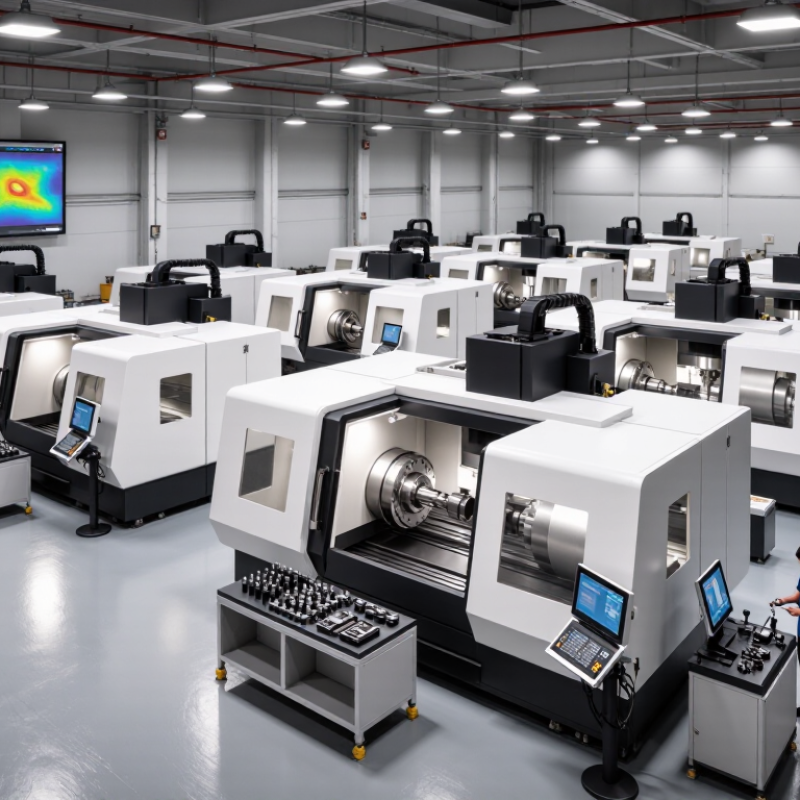
China’s high-speed CNC machining centers increasingly use spindles ranging from 12,000 to 60,000 rpm. This range supports rapid aluminum cutting, small tools, and detailed mold work. However, higher speed does not automatically mean better machining. Spindle power, torque, runout, cooling, and acceleration must match the intended material and tool size. A 60,000 rpm spindle may perform poorly during heavy steel cutting.
Experienced buyers should examine real cutting data, not only catalog figures. A reliable supplier can provide test-cut results, spindle runout measurements, thermal compensation details, and tool-change time. Ceramic or hybrid bearings can reduce heat, while oil-air lubrication helps maintain stable rotation. Direct-drive designs often reduce transmission vibration. Even small vibration marks can appear clearly on a polished cavity.
Temperature control matters. During a long machining cycle, spindle growth can shift the tool position by several microns. That error may damage a tight-tolerance component. Ask whether the machine includes coolant control, warm-up procedures, and calibration records. I would also inspect sample surfaces under magnification. They reveal chatter quickly. A fast spindle is useful, but it is not magic. Some supplier specifications appear optimistic, and buyers should question them politely. Trial machining remains more convincing than impressive numbers.


North of Industrial Road, Linqing Economic Development Zone,Liaocheng City, Shandong Province, China
info@lucimagnet.com
Angela:0086-13884742546
Eric: 0086-15688878114
Surface Grinder Machining Center CNC Lathe Machine Boring and Milling Machines
Semiconductor Optics Automobile Molding Construction Machinery Shipping Aerospace Valve Industry Wind Power Industry Abrasives Industry Refractory Industry Ceramic Seal Industry Bearings Industry
Company Patent Certificates Factory Tour Team Member Our Partner Our History Real-time Factory Inspection R&D Strength Terms & Conditions Privacy Statement


© 2025 Shandong Linmo CNC Machine tool Equipment Co.,Ltd. All Rights Reserved.