

Welcome to the SLMN Blog

Shandong Linmo CNC Machine Tool Equipment Co., Ltd.
Insights, Tips, and More from SLMN CNC Machine Tools

How to Choose the Best Horizontal Machining Center?

Choosing the best Horizontal Machining Center is not a simple catalog exercise. It is a production decision shaped by materials, tolerances, batch sizes, and future demand. A machine that excels in aluminum may struggle with hardened steel. A high-speed spindle may also deliver little value if fixtures, tooling, or chip evacuation remain weak.

The International Federation of Robotics reported 541,302 industrial robots installed worldwide in 2023. This figure shows how strongly manufacturers are pursuing automation and repeatable production. Deloitte’s 2024 Global Manufacturing Industry Outlook also highlights labor shortages, digital transformation, and operational resilience as major industry pressures. These trends make machine reliability, automation readiness, and service support as important as cutting speed.

The right evaluation starts with real parts. Measure envelope size, workpiece weight, pallet requirements, spindle torque, and tool capacity. Check whether the machine can hold tolerance after hours of continuous cutting. Ask for cycle-time evidence, not only brochure claims. Very important.

Buyers should also examine control functions, probing systems, coolant delivery, maintenance access, and local technical support. Energy use deserves attention, although it is sometimes overlooked. A lower purchase price can become expensive through downtime, poor chip control, or unavailable spare parts. No single model is best for every factory. My own judgment may overvalue measurable specifications, while operator experience can reveal problems that reports cannot. A careful decision therefore combines supplier data, independent testing, sample machining, and feedback from the people who will run the Horizontal Machining Center every day.
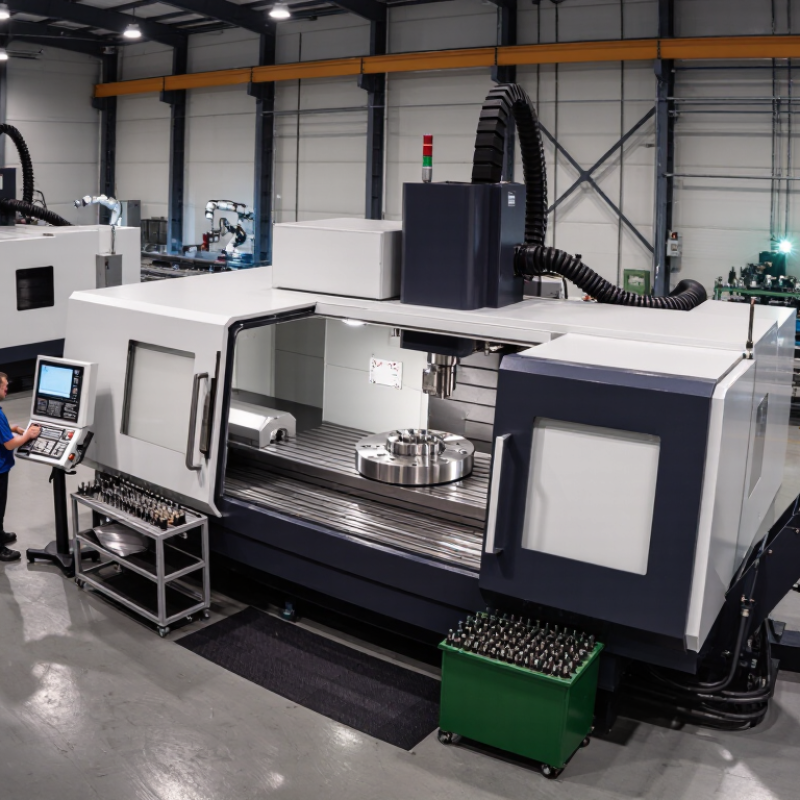
How to Choose the Best Horizontal Machining Center?

Define the Production Requirements for a Horizontal Machining Center

How to Choose the Best Horizontal Machining Center?

Define the Production Requirements for a Horizontal Machining Center

A horizontal machining center should match your actual production, not an idealized future plan. Start with the workpieces. Record their length, width, height, weight, and clamping points. A large casting may fit on the pallet but still block tool access. That detail matters.

Review annual volume, batch size, and expected cycle time. High-volume production may justify multiple pallets and automatic tool management. Smaller batches may need fast setup changes instead. Measure your current setup time. Estimates are often too optimistic.

Material changes the machine requirement. Aluminum needs high spindle speed and efficient chip removal. Steel and cast iron often demand stronger torque and rigid cutting performance. Record cutting data from real jobs, including tool life and coolant use. Test cuts are more reliable than brochures.

Tolerance and surface finish also guide the specification. If critical holes require tight accuracy, examine thermal control, probing, and workholding stability. Do not choose excessive accuracy without a process plan. It can raise cost without improving the part.

Leave room for mistakes. Operators may load mixed orders, tools may wear unevenly, and fixtures may need adjustment. A practical machine should recover from these events safely. Check service access, spare-part availability, training requirements, and floor space. Ask for documented cycle-time trials using your material, tooling, and fixtures. That evidence supports a dependable decision.

Compare Machine Structure, Work Envelope, and Axis Configuration

How to Choose the Best Horizontal Machining Center?

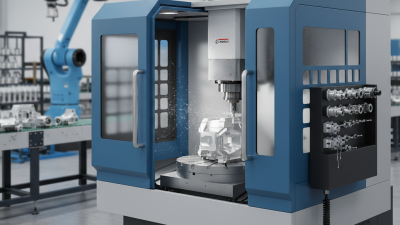
Machine structure should match the cutting forces in your parts. A box-style column often provides strong rigidity, while a moving-column design can improve access. Inspect rib geometry, guideway span, thermal control, and chip evacuation. These details influence surface finish after long cutting cycles. AMT’s 2024 U.S. Manufacturing Technology Orders report recorded approximately 4.67 billion dollars in machine tool orders. That figure reflects continued investment, but it does not make every machine suitable for your process.

Define the work envelope from real fixtures, not brochure travel. Check X, Y, and Z strokes, spindle-nose-to-table distance, pallet clearance, door opening, and tool-change space. Leave room for tombstones, clamps, probes, and chip conveyors. A machine may reach the required coordinate, yet still fail with a tall fixture installed. I have seen buyers underestimate this clearance. It is an expensive oversight.

Axis configuration should follow the part family. Three linear axes suit many prismatic components. A fourth axis supports efficient multi-face indexing. Simultaneous five-axis motion helps complex surfaces, but it demands reliable postprocessing and verification. Deloitte’s 2024 Smart Manufacturing and Operations Survey found that 86% of manufacturers expect smart manufacturing to support competitiveness within five years. Automation matters. Yet it cannot correct poor axis geometry. Compare positioning accuracy and repeatability under ISO 230-2 conditions, then inspect results at operating temperature. Cold accuracy can mislead.

How to Choose the Best Horizontal Machining Center? Compare Machine Structure, Work Envelope, and Axis Configuration

The following comparison uses representative specifications for three common horizontal machining center classes. Actual machine capabilities vary by configuration, tooling, workholding, and manufacturer.

Selection Dimension Compact HMC Production HMC Heavy-Duty HMC Selection Consideration
Typical application Small to medium prismatic parts, valve bodies, compact housings, and general job-shop work Repeated production of medium-sized components with multiple faces and frequent pallet changes Large castings, structural parts, energy-sector components, and high-volume metal removal Match the machine class to the largest part, required removal rate, and expected production volume.
Machine structure Compact column-and-table design with a relatively small footprint Rigid fixed-column or moving-column layout with reinforced bed and column assemblies Heavy ribbed bed, large column, wide guideways, and high structural mass for maximum rigidity A heavier and stiffer structure generally improves cutting stability, especially during deep cuts and hard-material machining.
Typical X / Y / Z travel 630 / 630 / 700 mm 1,000 / 800 / 800 mm 1,600 / 1,200 / 1,000 mm Allow clearance for the workpiece, fixture, cutting tools, chip evacuation, and tool-change position.
Typical pallet size 400–500 mm square 500–630 mm square 800–1,000 mm square The pallet must support the fixture and part while leaving enough access for tools and rotary-axis motion.
Typical maximum workpiece load Approximately 300–600 kg Approximately 700–1,200 kg Approximately 1,500–3,000 kg Confirm both the total load rating and the allowable load moment; an off-center part can reduce usable capacity.
Spindle taper BT40, CAT40, or equivalent 40-taper system BT40 or BT50, depending on cutting requirements BT50, CAT50, or equivalent 50-taper system 40-taper systems favor speed and smaller tools; 50-taper systems provide greater toolholder rigidity and cutting capacity.
Typical spindle-speed range 8,000–15,000 rpm 6,000–12,000 rpm 4,000–8,000 rpm Choose speed based on material, tool diameter, surface-finish requirements, and whether the work is roughing or finishing.
Standard axis configuration 3 linear axes with a programmable B-axis rotary table 3 linear axes with a B-axis pallet or rotary table; simultaneous 5-axis may be optional 3 linear axes with a high-torque B-axis; additional rotary or tilting axes may be available for complex parts A standard 4-axis arrangement is suitable for machining multiple sides; simultaneous 5-axis control is useful for complex surfaces and reduced setups.
Indexing capability Commonly 1-degree or finer indexing; continuous rotation depends on the rotary-table design Typically 1-degree indexing or continuous B-axis interpolation High-torque indexing or continuous interpolation designed for large fixtures and heavy cutting Use continuous interpolation when the tool must follow a curved surface or when multiple angular positions are required in one setup.
Tool magazine capacity Approximately 24–40 tools Approximately 40–80 tools Approximately 60–120 tools Calculate capacity from the number of tools per part, tool duplication for unattended production, and the required product mix.
Rapid-traverse priority High priority for short cycle times and frequent positioning movements Balanced priority between rapid positioning and cutting rigidity Rigidity and torque generally take priority over maximum rapid-traverse speed High rapid speed does not compensate for insufficient rigidity, poor acceleration control, or inadequate chip evacuation.
Best fit for Limited floor space, smaller parts, flexible production, and lower fixture weight Mixed production, multi-face machining, palletized workflows, and repeat orders Large parts, difficult materials, heavy fixtures, and high metal-removal requirements Evaluate the full production system, including loading method, pallet pool, inspection, coolant, and chip management.
Key purchasing risk Insufficient work envelope or pallet capacity as part sizes increase Overpaying for capacity that is not used, or selecting insufficient spindle torque for roughing Higher installation, foundation, energy, tooling, and handling requirements Compare the machine’s usable capacity—not only its maximum travel—with the real dimensions and weight of your parts.

Practical rule: Select the smallest horizontal machining center that safely accommodates the largest workpiece, fixture, tool reach, load moment, and future production needs. Verify published specifications through a cutting test and a complete workholding review before purchase.

Evaluate Spindle Performance, Accuracy, and Cutting Capability

Choosing a horizontal machining center starts with spindle performance, not maximum speed. A 12,000 rpm spindle may suit steel, while aluminum often benefits from 18,000 rpm or more. Check torque curves, not headline rpm. A spindle producing 300 Nm at low speed can stabilize heavy roughing and reduce chatter. The 2024 World Machine Tool Survey from Gardner Intelligence valued global machine-tool consumption near 85 billion dollars in 2023, showing how competitive this investment has become. Small specification differences matter.

Accuracy requires more than a positioning number. ISO 230-2 evaluates positioning accuracy and repeatability across several positions and approach directions. ISO 230-3 addresses thermal effects, which can shift a part after hours of cutting. Ask for test results at operating temperature. Also inspect scale feedback, ball-screw support, and table rigidity. In practice, a machine rated for 0.005 mm positioning error may still produce larger part variation when coolant temperature changes. That is easy to overlook.

Cutting capability should match real tools and materials. Compare spindle torque, motor power, maximum tool diameter, tool-change time, and chip evacuation. A 40-taper spindle may be adequate for moderate work; heavy steel cutting often demands stronger tooling and greater rigidity. Look for published test cuts, material grades, depth of cut, and cycle time. Industry reports often emphasize productivity, but cycle-time claims can hide unfinished surfaces or excessive tool wear. Test your own hardest component. It may expose an uncomfortable gap.

Review Automation, Control Systems, and Operator Requirements

Choosing a horizontal machining center starts with its automation and control architecture, not its brochure cycle time. The International Federation of Robotics reported 541,302 industrial robot installations worldwide in 2023. That figure signals a clear direction: unattended machining is becoming more common, but it still demands disciplined process design.

Examine pallet loading, tool measurement, chip removal, and recovery after an alarm. A reliable system should show the fault clearly and guide the operator through safe recovery. Small details matter. Can one operator monitor several machines without walking constantly? Does the control system record tool life, offsets, alarms, and inspection results? Deloitte’s 2024 Smart Manufacturing and Operations Survey found that 86% of manufacturers view smart manufacturing as important for competitiveness within five years. Connectivity matters, but it is not magic. Poor data can simply create faster confusion.

Operator requirements should match the real workload. A compact cell may need one trained technician for setup, probing, maintenance checks, and quality verification. Advanced automation reduces repetitive handling, yet it increases the need for programming and troubleshooting skills. Training hours should be measured before purchase. A machine that looks autonomous may still depend on one highly experienced person. That is a weakness worth admitting. Reviewers should test alarm recovery, manual intervention, and software usability during a live demonstration, not only inspect a polished production cycle.

Assess Total Cost, Maintenance, Support, and Long-Term Value

Buying a horizontal machining center requires more than comparing the purchase price. I examine spindle hours, expected cycle time, power consumption, tooling needs, and installation costs. A lower-priced machine may require extra fixtures, software, or operator training. Those additions can quietly reshape the budget.

Maintenance deserves close attention. Ask how often the spindle, coolant system, lubrication lines, and chip conveyor need inspection. Review service records from similar machines, not only sales estimates. I once underestimated coolant management costs on a busy production line. That estimate was wrong. Small leaks and dirty filters created repeated stoppages. A maintenance schedule with clear labor hours is more useful than a vague promise of reliability.

Support can protect long-term value. Check response times, technician availability, spare-parts access, and training options. Ask whether remote diagnostics are secure and properly documented. Also measure support quality after installation, when production pressure is highest. A machine that runs accurately for ten years may still lose value if repairs take weeks. Consider energy use, software updates, retrofit options, and resale demand. Review these details with operators and maintenance staff, because they notice practical problems early. Leave room for uncertainty. Production volumes change, and optimistic forecasts often age badly. The best choice balances dependable output, manageable upkeep, responsive support, and costs that remain visible over time.

How to Choose the Best Horizontal Machining Center?

Assess total cost, maintenance, support, and long-term value before making a purchase decision.

The chart uses a weighted evaluation model on a 0–100 scale. Total cost of ownership includes acquisition, installation, energy, maintenance, tooling, and downtime exposure. A strong horizontal machining center should balance low operating cost with reliable service support and consistent long-term productivity.

  • Address

    North of Industrial Road, Linqing Economic Development Zone,Liaocheng City, Shandong Province, China

  • Email

    info@lucimagnet.com

  • Phone/WhatsApp

    Angela:0086-13884742546
    Eric: 0086-15688878114

Get in touch with SLMN today. Whether you have questions about our CNC machine tools , or are interested in becoming a distributor, our team is ready to assist you.

© 2025 Shandong Linmo CNC Machine tool Equipment Co.,Ltd. All Rights Reserved.

Privacy Statement Terms & Conditions Sitemap Top Blog

© 2025 Shandong Linmo CNC Machine tool Equipment Co.,Ltd. All Rights Reserved.

Privacy Terms & Conditions Sitemap Top Blog