

Welcome to the SLMN Blog

Shandong Linmo CNC Machine Tool Equipment Co., Ltd.
Insights, Tips, and More from SLMN CNC Machine Tools

What Is a Compact Horizontal Machining Center?

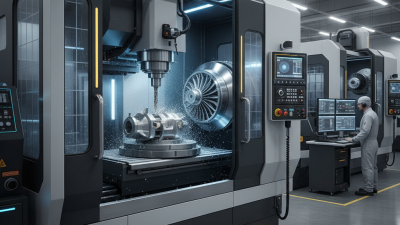
A Compact Horizontal Machining Center is more than a smaller machine tool. It is a space-conscious production system built around a horizontal spindle, pallet workholding, and multi-face machining. This arrangement lets chips fall away from the cutting zone, while the operator accesses several workpiece surfaces with fewer setups. In a busy job shop, that can mean shorter handling time, cleaner fixtures, and a smaller footprint beside the inspection bench.

Industry data supports the demand for more connected and productive equipment. The International Federation of Robotics reported 541,302 industrial robot installations worldwide in 2023, showing how strongly manufacturers are investing in automation. The U.S. Manufacturing Technology Orders report from AMT also tracks sustained demand for digitally controlled production equipment across North American factories. These reports do not prove that every buyer needs a compact horizontal platform. They do show the pressure behind faster, more flexible manufacturing.

The practical question is not simply, “How small is it?” A useful evaluation examines pallet size, spindle torque, tool capacity, rapid-traverse speed, enclosure access, and chip evacuation. A 400-millimeter pallet may suit aluminum housings, pump bodies, and compact automotive parts. It may struggle with large castings or deep cuts in hardened steel. Energy use also deserves attention. ISO 14955 provides a framework for assessing machine-tool energy efficiency, but real consumption depends on cutting conditions, idle time, and maintenance.

That is where specifications can mislead. A compact design saves floor space, yet limited working volume may restrict future jobs. The best choice connects machine architecture with actual part families, takt time, operator skill, and expansion plans. In this guide, we examine what a Compact Horizontal Machining Center is, how it works, and when its compromises make commercial sense.

What Is a Compact Horizontal Machining Center?

Definition and Core Function of a Compact Horizontal Machining Center

What Is a Compact Horizontal Machining Center?

A compact horizontal machining center is a CNC machine with a horizontal spindle and a space-saving structure. Its spindle approaches the workpiece from the side, while the table holds the part on a pallet or fixture. This layout supports efficient chip removal because gravity helps chips fall away from the cutting area. The core function is precise, repeatable machining of multiple surfaces, often with fewer manual repositioning steps.

In a typical workshop, this machine performs milling, drilling, tapping, and boring operations. Its automatic tool changer moves between cutters with limited operator input. A rotary table may also turn the workpiece, exposing several faces during one setup. This can reduce alignment errors and shorten production time. However, compact size does not mean unlimited capacity. The work envelope, spindle power, tool length, and fixture height must match the part. That assumption often fails.

Tips: Check the actual travel range before purchase or installation. Leave room for chip evacuation and maintenance access. Use rigid fixtures, because small machines still respond poorly to vibration. Verify part accuracy with calibrated measuring equipment, not visual judgment. In my experience, careful setup matters as much as machine specifications. A compact horizontal center can deliver stable results, but only when tooling, coolant flow, and workholding receive equal attention. Some jobs may still need another machine.
Key Components and Horizontal Spindle Configuration

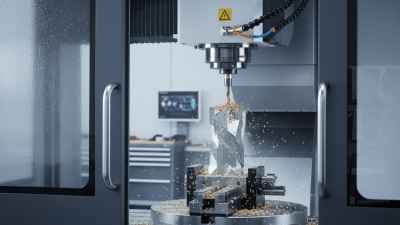
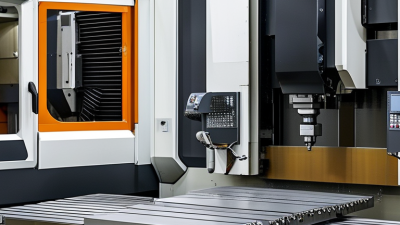
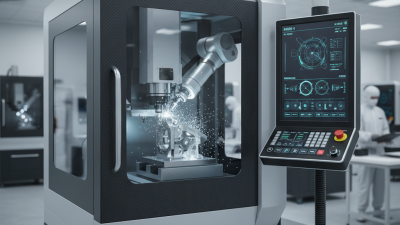
A compact horizontal machining center is a CNC machine built around a horizontal spindle and a smaller floor footprint. Its key components include the spindle motor, tool magazine, automatic tool changer, rotary table, linear guideways, ball screws, coolant system, and chip conveyor. The spindle faces sideways, so the cutting tool approaches the workpiece horizontally. This layout lets chips fall away from the cutting zone instead of collecting around the tool.

The horizontal configuration becomes especially useful during deep-pocket and multi-face machining. A rotary table can expose several workpiece sides without repeated setup. That reduces handling time and may improve positional consistency. According to Grand View Research’s 2024 CNC machine market assessment, the global market is expected to grow at about 8.9% annually through 2030. This growth reflects demand for automation, compact production cells, and higher machine utilization.

Small does not mean simple. A compact center still needs a rigid column, accurate linear axes, and stable thermal control. The spindle’s taper, bearing arrangement, and maximum speed affect both tool life and surface quality. In practice, a 10,000-rpm spindle may suit general steel work, while aluminum production can require much higher speed. Yet maximum speed alone is not enough. I have seen specifications look impressive while chip evacuation remained weak. That detail deserves more attention. The 2023 U.S. Department of Energy manufacturing efficiency guidance also identifies idle running, coolant demand, and compressed-air use as important energy factors. A thoughtful machine choice examines cycle time, accessibility, maintenance space, and real cutting loads—not only advertised dimensions.

How Compact Horizontal Machining Centers Operate

A compact horizontal machining center uses a horizontal spindle to cut parts mounted on a pallet. The setup is compact, but the process is not simple.

The machine rotates the cutting tool while the workpiece remains secured on the pallet. Linear axes move the spindle around the part. Many models also use a rotary table for angled features. A tool magazine selects drills, end mills, and boring tools automatically. The controller reads programmed coordinates, tool offsets, spindle speed, and feed rate. Small details matter.

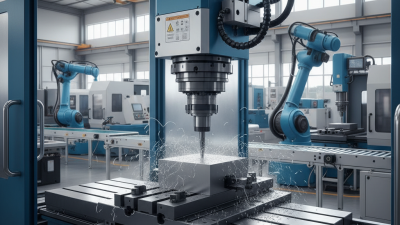
During production, the pallet may rotate into the machining zone while another pallet is loaded outside. This reduces waiting time and supports steady workflow. Coolant carries heat and chips away from the cutting area. Chip conveyors then remove debris before it damages finished surfaces. In real shops, poor chip evacuation still causes avoidable stoppages.

According to the U.S. Department of Energy, compressed-air leaks can waste 20–30% of compressor output. That figure matters when pneumatic clamping and automated doors operate continuously. Energy checks should include idle spindle time, coolant pumps, and air usage. The 2024 Deloitte Smart Manufacturing and Operations Survey reported that 86% of manufacturers expect smart manufacturing to become essential within five years. Sensors can monitor vibration, temperature, tool life, and cycle time. Yet sensor data is not automatically useful. Operators must connect it to actual defects, maintenance records, and production decisions.

Typical Applications and Suitable Materials

A compact horizontal machining center combines a horizontal spindle, automatic tool changer, and palletized workholding in a small footprint. Its layout helps chips fall away from the cutting zone. That matters when machining deep pockets, cross-holes, or several faces on one part. According to the 2024 World Machine Tool Survey, global machine-tool consumption exceeded US$80 billion in 2023, reflecting steady demand for productive, flexible equipment.

Typical applications include gearbox housings, valve bodies, pump components, manifolds, and precision brackets. Automotive and general engineering shops often use compact horizontal systems for medium-volume production. Aerospace suppliers may machine aluminum frames and titanium fittings, but titanium demands lower cutting speeds, stable fixturing, and careful heat control. It is not automatically a fast material.

Suitable materials range from aluminum and cast iron to carbon steel, stainless steel, and selected nickel alloys. Aluminum supports high-speed cutting and short cycle times. Cast iron produces stable, repeatable results, although abrasive dust requires disciplined maintenance. Stainless steel needs rigid tooling and controlled coolant delivery. The International Energy Agency has reported that industrial motors and process equipment account for a substantial share of manufacturing electricity use, so idle time and inefficient cutting deserve attention. The smallest machine is not always the most economical choice. A trial cut should check chip evacuation, thermal growth, tool life, and operator access before purchase.

What Is a Compact Horizontal Machining Center? - Typical Applications and Suitable Materials
Application Area Typical Components Why a Compact Horizontal Machining Center Is Suitable Suitable Materials Common Machining Operations Important Selection Considerations
Automotive and Transportation Transmission housings, differential cases, brackets, steering components and small powertrain parts Horizontal spindle access and multi-sided workholding can reduce the number of setups and improve chip evacuation in pockets and bores. Aluminum alloys, ductile iron, gray cast iron and medium-carbon steels Face milling, boring, drilling, tapping, reaming and contour milling Check pallet size, work envelope, spindle torque and compatibility with tombstones or multi-part fixtures.
Aerospace and Uncrewed Systems Structural brackets, actuator parts, fittings, housings and compact airframe components Rigid four-axis or five-axis configurations can machine multiple faces while maintaining positional accuracy and reducing re-fixturing. Aluminum alloys, titanium alloys, stainless steels and nickel-based alloys for suitable heavy-duty machines Adaptive roughing, pocketing, drilling, thread milling and simultaneous-axis contouring Prioritize thermal stability, low runout, high-pressure coolant and an adequate tool management system.
Hydraulics and Fluid Power Valve bodies, manifold blocks, pump housings, connector blocks and hydraulic adapters Multiple faces can be machined accurately from a single fixture, which is useful for intersecting bores and closely located ports. Aluminum, brass, bronze, carbon steel, stainless steel and ductile iron Deep-hole drilling, cross-boring, tapping, chamfering and sealing-face milling Evaluate through-spindle coolant capability, chip removal, boring-bar clearance and spindle power at low speed.
General Engineering and Job Shops Machine bases, gear housings, couplings, fixtures, custom brackets and low-volume production parts Flexible fixturing and palletized loading support frequent part changes while preserving access to several work faces. Aluminum, steel, stainless steel, cast iron, brass and engineering plastics Roughing, finishing, drilling, tapping, boring and 3D profile milling Consider control flexibility, setup repeatability, tool capacity and ease of access for short production runs.
Medical and Laboratory Equipment Instrument housings, orthopedic-tool components, pump bodies, surgical-device parts and analytical equipment frames Accurate positioning and repeatable multi-face machining are beneficial for compact components with tight feature relationships. Titanium, stainless steel, cobalt-chromium alloys, aluminum and acetal or other machinable plastics Fine milling, drilling, reaming, thread milling, engraving and surface finishing Use clean coolant practices, stable fixturing, high spindle speed where appropriate and validated process control.
Energy and Electrical Equipment Motor housings, terminal boxes, connector bodies, heat-sink components and small turbine or pump parts Compact machine footprints help conserve floor space while horizontal access supports efficient machining of side ports and internal features. Aluminum, copper alloys, stainless steel, low-alloy steel and cast iron Slotting, drilling, tapping, pocket milling, boring and face milling Match spindle speed and torque to the material, and verify coolant filtration for nonferrous chips.
Mold, Die and Tooling Electrode holders, die inserts, mold components, guide plates and compact tooling assemblies High rigidity and multi-axis interpolation allow accurate machining of cavities, holes and angled surfaces from fewer setups. Pre-hardened tool steel, alloy steel, hardened steel within machine capability, graphite and copper High-speed milling, contouring, pocketing, drilling, reaming and thread machining Verify maximum workpiece weight, spindle speed range, thermal compensation and toolpath-control capabilities.
Suitable Workpiece Size Small to medium parts that fit within the machine's X, Y and Z travel limits The compact format is intended to provide horizontal machining productivity without the floor space of a larger production center. Material choice depends on machine rigidity, spindle power, tooling and cutting-fluid configuration. Three-axis, four-axis or five-axis machining depending on machine configuration Confirm actual travel, pallet dimensions, door opening, fixture height, tool clearance and maximum part mass before purchase.
Materials Requiring Extra Planning Large titanium parts, hardened alloys, abrasive composites and very deep or slender features These materials or geometries may require more rigidity, torque, coolant pressure, specialized tooling or a larger machine platform. Titanium, nickel-based alloys, hardened tool steels, carbon-fiber composites and abrasive materials Reduced-load roughing, peck drilling, high-pressure coolant machining and specialized finishing Review cutting-force data, spindle duty cycle, chip-control requirements, dust or coolant handling and tool-life expectations.

Advantages, Limitations, and Selection Considerations

What Is a Compact Horizontal Machining Center?

A compact horizontal machining center uses a sideways spindle to cut parts mounted on a pallet. Its layout supports machining several faces with fewer manual resets. In daily production, this can improve consistency and reduce handling time. Chips also fall away from the cutting area more naturally. That matters when deep pockets produce heavy chip loads.

Its main advantage is efficient use of floor space. A tombstone fixture can hold multiple parts at once. This supports repeatable production and shorter idle periods. However, compact machines have limits. Their smaller work envelope may restrict large fixtures or tall components. Operators may also find tool access less visible than on vertical equipment. The machine can cost more to configure, especially with rotary axes, probing, and automated pallet changes. Compact does not always mean simple. Maintenance access can be surprisingly tight.

Tips: Measure the complete part, fixture, and tool clearance. Check spindle torque, not only maximum speed. Review pallet size, axis travel, chip management, coolant delivery, and service support. Ask for a test cut using your hardest material and most demanding feature. Real cutting evidence is more useful than a specification sheet. Also consider operator training and programming time. A fast machine can still lose productivity when setup work remains complicated. Selection should reflect your actual batch sizes, tolerance demands, and future parts. Needs careful thinking.

  • Address

    North of Industrial Road, Linqing Economic Development Zone,Liaocheng City, Shandong Province, China

  • Email

    info@lucimagnet.com

  • Phone/WhatsApp

    Angela:0086-13884742546
    Eric: 0086-15688878114

Get in touch with SLMN today. Whether you have questions about our CNC machine tools , or are interested in becoming a distributor, our team is ready to assist you.

© 2025 Shandong Linmo CNC Machine tool Equipment Co.,Ltd. All Rights Reserved.

Privacy Statement Terms & Conditions Sitemap Top Blog

© 2025 Shandong Linmo CNC Machine tool Equipment Co.,Ltd. All Rights Reserved.

Privacy Terms & Conditions Sitemap Top Blog