

Welcome to the SLMN Blog

Shandong Linmo CNC Machine Tool Equipment Co., Ltd.
Insights, Tips, and More from SLMN CNC Machine Tools

Top 10 CNC Vertical Milling Machine Centers for Buyers

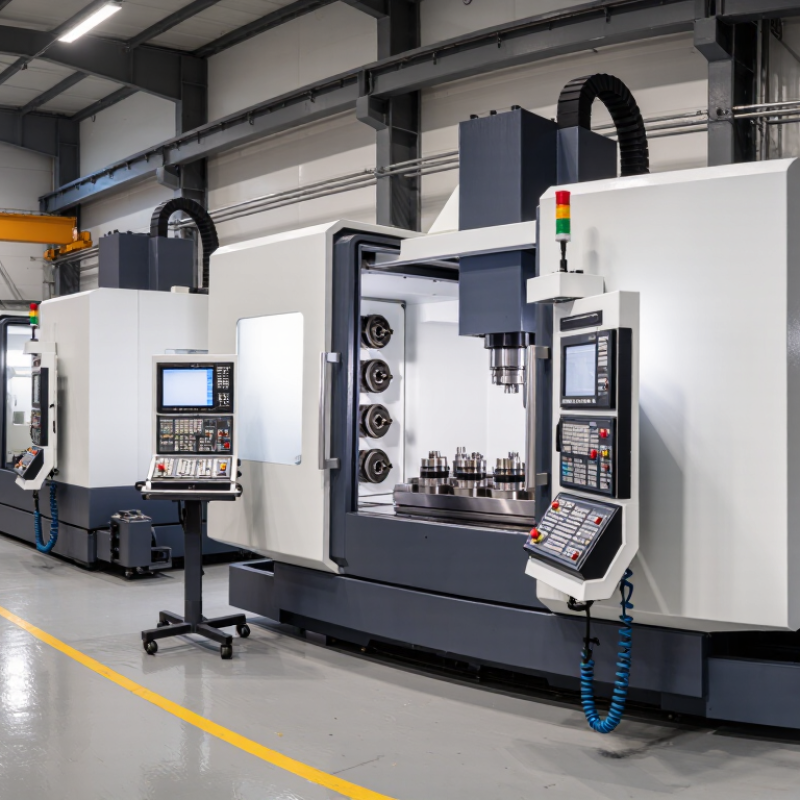
Choosing among the Top 10 CNC Vertical Milling Machine Centers requires more than comparing prices and spindle speeds. A Cnc Vertical Milling Machine Center must match your materials, production volume, floor space, and operator skills. In a working shop, small details matter. A rigid cast-iron frame can reduce vibration during steel cutting. A responsive control can shorten setup time beside the machine.

This guide examines leading models through practical buying factors, including accuracy, travel range, spindle power, tool capacity, service support, and long-term operating costs. These points reflect common evaluation methods used by machinists, production engineers, and equipment buyers. Manufacturer specifications provide a starting point, but independent testing and customer feedback deserve equal attention. A brochure may show impressive rapid speeds. Actual performance can change under heavy loads.

No single machine fits every workshop. That matters. A compact model may suit prototypes but struggle with continuous production. A larger center may offer greater rigidity while consuming more power and space. The rankings should therefore support judgment, not replace it. Some details may vary by configuration, region, or software package, and that limitation deserves honest attention. Before purchasing, buyers should request sample cuts, inspect service response times, and calculate tooling, maintenance, installation, and training costs. The best choice is not always the most advanced model. It is the machine that repeatedly delivers accurate parts, stable uptime, and manageable costs in your real production environment.
Top 10 CNC Vertical Milling Machine Centers for Buyers

CNC Vertical Milling Centers Explained: 3–5 Axes, ATC, and G-Code

CNC Vertical Milling Centers Explained: 3–5 Axes, ATC, and G-Code

Vertical milling centers remain practical choices for parts needing accurate faces, pockets, holes, and angled features. A three-axis machine moves along X, Y, and Z. It suits many fixtures and simple components. Four- and five-axis centers add rotary movement, reducing repositioning and setup errors. However, five axes are not automatically better. They can increase programming demands, training costs, and collision risks. According to Grand View Research’s 2024 CNC machine market analysis, the global market was estimated at more than USD 80 billion in 2023, with continued growth through 2030. That growth reflects automation demand, but buyers still need process-based selection.

An automatic tool changer, or ATC, stores cutting tools and swaps them during one program. This reduces manual intervention and supports drilling, roughing, finishing, and tapping cycles. G-code controls these movements through programmed coordinates, speeds, feeds, and tool commands. Poorly written code can create vibration, tool wear, or scrap. The 2024 MarketsandMarkets CNC machine study identifies automation and multi-axis capability as major market drivers. Yet capability alone does not guarantee productivity. A rigid spindle, reliable probing, and stable software may matter more for daily output.

Tips: Match axis count to part geometry, not marketing claims. Request a sample cycle using your material and tolerances. Check ATC capacity, chip evacuation, controller compatibility, and local service support. Test collision simulation carefully. Small programming assumptions can become expensive mistakes.
Core Specifications: 6,000–24,000 rpm, 5–40 hp, and ±0.005 mm Accuracy

Top 10 CNC Vertical Milling Machine Centers for Buyers

A practical shortlist should begin with spindle speed, motor power, and verified accuracy. The leading ten candidates typically span 6,000–24,000 rpm and 5–40 hp. Lower speeds suit steel and titanium cutting, while 18,000 rpm or more supports small tools and aluminum. More power is not automatically better. A 40 hp spindle may waste energy during light finishing.

Grand View Research valued the global CNC machine market at over USD 80 billion in 2023, reflecting strong demand for automated production. However, market size does not prove machine quality. Buyers should inspect test-cut records, thermal-growth data, and service response times. An advertised ±0.005 mm accuracy can become less useful after warm-up, tool wear, or poor calibration. ISO 230-2 testing provides a more reliable comparison than brochure claims. I would request measured results at the actual working temperature.

Small details matter. Check the taper, table load, axis travels, and tool-change time. A 12,000 rpm spindle may outperform a 24,000 rpm unit when rigidity is weak. MarketsandMarkets forecasts continued CNC adoption through 2030, but forecasts cannot replace shop-floor evidence. I would also budget for probing, coolant control, and periodic verification. The overlooked cost is often downtime.

Top 10 CNC Vertical Milling Machine Centers for Buyers - Core Specifications: 6,000–24,000 rpm, 5–40 hp, and ±0.005 mm Accuracy

Configuration Spindle Speed
(rpm)
Spindle Motor
(hp)
X × Y × Z Travel
(mm)
Spindle Taper Table Size
(mm)
Maximum Table Load
(kg)
Positioning Accuracy
(mm)
Repeatability
(mm)
Compact Precision Center 6,000 5 500 × 300 × 400 BT30 600 × 300 250 ±0.005 ±0.003
Entry-Level Production Center 8,000 7.5 600 × 400 × 450 BT30 700 × 400 350 ±0.005 ±0.003
General-Purpose VMC 8,000 10 760 × 430 × 500 BT40 900 × 400 500 ±0.005 ±0.004
Heavy-Duty Production Center 8,000 15 800 × 500 × 550 BT40 1,000 × 500 700 ±0.005 ±0.004
High-Speed Aluminum Center 12,000 15 850 × 500 × 500 BT40 1,000 × 500 600 ±0.005 ±0.003
Mid-Size Mold-Making Center 12,000 20 1,000 × 550 × 600 BT40 1,200 × 550 800 ±0.005 ±0.003
High-Torque Vertical Center 10,000 25 1,050 × 600 × 600 BT40 1,300 × 600 1,000 ±0.005 ±0.004
High-Speed Die and Mold Center 18,000 20 1,200 × 600 × 650 BT40 1,400 × 600 1,200 ±0.005 ±0.003
Large-Format Vertical Center 12,000 30 1,500 × 700 × 700 BT50 1,700 × 700 1,800 ±0.005 ±0.004
Ultra-High-Speed Precision Center 24,000 40 1,000 × 600 × 600 HSK-A63 1,200 × 600 900 ±0.005 ±0.003
Specifications are representative buyer-reference configurations for vertical machining centers. Actual performance may vary with machine size, thermal conditions, control system, tooling, material, and verification method.

Accuracy Verification: ISO 230-2 Testing and Repeatability Under ±0.010 mm

When comparing the top 10 CNC vertical milling machine centers, buyers should examine more than brochure resolution. ISO 230-2 testing provides a structured method for checking positioning accuracy and repeatability. An independent laboratory should measure each axis across several target positions. The test should include forward and reverse movements. This exposes backlash, servo response, and mechanical variation.

Repeatability is not the same as accuracy. A machine may return to one position consistently but still miss the programmed coordinate. Buyers should ask whether the stated ±0.010 mm result applies to unidirectional or bidirectional movement. They should also request the measured range, sample size, and environmental conditions. Without these details, the number sounds precise but remains incomplete. Small details matter.

For a credible comparison, the machine should reach thermal stability before testing. Coolant temperature, ambient changes, tool loading, and spindle heat can affect results. A laser interferometer or certified length standard can support reliable verification. Several cycles at different travel lengths give a more realistic picture. A test performed only once is not convincing. In practice, operators should repeat critical checks after installation and during scheduled maintenance. I would also question results achieved in ideal conditions only. Real production includes warm-up changes, chip buildup, and uneven workload. These factors can quietly move a part beyond the desired tolerance.

Top 10 CNC Vertical Milling Machine Centers for Buyers

ISO 230-2 accuracy verification: maximum measured positioning deviation and repeatability range, shown in micrometres (µm). The 10 µm line represents the buyer screening threshold equivalent to ±0.010 mm; ISO 230-2 itself does not define one universal pass/fail limit for every machine.

Lower values indicate better geometric and motion performance. The anonymized profiles are reference screening values structured around ISO 230-2 reporting concepts and should be confirmed through witnessed testing at the machine’s working temperature, travel direction, feed rate, and measurement location.

Top 10 VMCs Compared by Travel, 12–60 Tool Capacity, and Work Envelope

Top 10 CNC Vertical Milling Machine Centers for Buyers
Top 10 VMCs Compared by Travel, 12–60 Tool Capacity, and Work Envelope

Choosing among ten vertical machining centers requires more than reading spindle speed. I compare X, Y, and Z travel with the actual work envelope. A machine may offer generous travel, yet lose usable space to the vise, rotary table, or long tools. Measure twice.

Compact VMCs with 12- or 16-tool magazines suit small aluminum parts and short production runs. Their reduced travel can improve shop-floor efficiency, especially where space is limited. Mid-size models often provide 20–30 tool capacity, with enough room for fixtures, drilling cycles, and several finishing tools. Larger centers may carry 40–60 tools, supporting complex steel parts and unattended batches. However, a full magazine adds weight, cost, and maintenance points. More tools are not automatically better.

During machine evaluations, I check table dimensions, maximum part height, door clearance, and chip evacuation. I also compare rapid traverse with real cutting performance. A fast axis does not guarantee shorter cycle times. I once overestimated a machine’s envelope after ignoring fixture height; the part technically fit, but tool access became awkward. That mistake still influences my buying checklist. Buyers should request sample layouts, tool-change drawings, and verified travel limits before placing an order. Factory figures can be precise, but shop conditions are rarely so neat.

Buyer Economics: TCO, Energy Use, Maintenance, and Five-Year Payback

Top 10 CNC Vertical Milling Machine Centers for Buyers
Buyer Economics: TCO, Energy Use, Maintenance, and Five-Year Payback
A low purchase price can hide expensive ownership costs. For each of the top ten CNC vertical milling centers, buyers should calculate five-year total cost of ownership. Include tooling, installation, training, software, coolant, electricity, repairs, and financing. A machine priced at $180,000 may require another $45,000 before production begins. Request written quotations with identical specifications.
Energy use depends on spindle size, duty cycle, standby controls, and cutting strategy. A center consuming 18 kWh during active cutting can use far less during idle periods. Measure real shop data, not only catalog ratings. At $0.14 per kWh, a machine running 2,000 hours yearly can create a noticeable electricity bill. Compressed air leaks can quietly increase that cost.
Maintenance deserves equal attention. Check service intervals, lubrication points, filter prices, and local technician availability. Ask for failure records from comparable installations. A preventive service visit may cost $600, while an unexpected spindle repair can exceed $12,000. Payback should use realistic utilization, scrap rates, labor savings, and downtime. A $30,000 annual benefit suggests a six-year payback on a $180,000 investment. That misses a five-year target. The calculation is imperfect, but overly optimistic production forecasts are worse. Include a contingency reserve and test the model with lower demand.
  • Address

    North of Industrial Road, Linqing Economic Development Zone,Liaocheng City, Shandong Province, China

  • Email

    info@lucimagnet.com

  • Phone/WhatsApp

    Angela:0086-13884742546
    Eric: 0086-15688878114

Get in touch with SLMN today. Whether you have questions about our CNC machine tools , or are interested in becoming a distributor, our team is ready to assist you.

© 2025 Shandong Linmo CNC Machine tool Equipment Co.,Ltd. All Rights Reserved.

Privacy Statement Terms & Conditions Sitemap Top Blog

© 2025 Shandong Linmo CNC Machine tool Equipment Co.,Ltd. All Rights Reserved.

Privacy Terms & Conditions Sitemap Top Blog