


Choosing a 4 Axis Cnc Machining Center is rarely about adding one more rotary axis. It is about reducing setups, improving access, and controlling production risk. In a busy workshop, that difference appears clearly. A component moves from fixture to fixture less often. Its datum stays more stable. Cutting tools reach angled faces without repeated manual repositioning.
John Saunders, CNC educator and founder of NYC CNC, offers a practical principle: “The best machine is the one that makes the part profitably.” This idea fits four-axis machining well. A 4 Axis Cnc Machining Center can machine multiple faces in one setup, helping manufacturers shorten cycle times and limit alignment errors. It also supports more flexible workholding for housings, brackets, impellers, and other parts with complex side features.
However, four-axis capability is not automatically the right investment. Tool clearance, programming skill, fixture design, and operator training still matter. A rotary axis can increase productivity, but it can also expose weak process planning. That part deserves honest attention. Some shops may gain more from better tooling or inspection equipment.
The real question is practical: will the fourth axis create measurable value on your recurring parts? This guide examines that decision through accuracy, setup reduction, machining flexibility, maintenance, and total operating cost. Expect useful advantages, but not magic. A machine earns its place through repeatable results, reliable uptime, and profitable work.
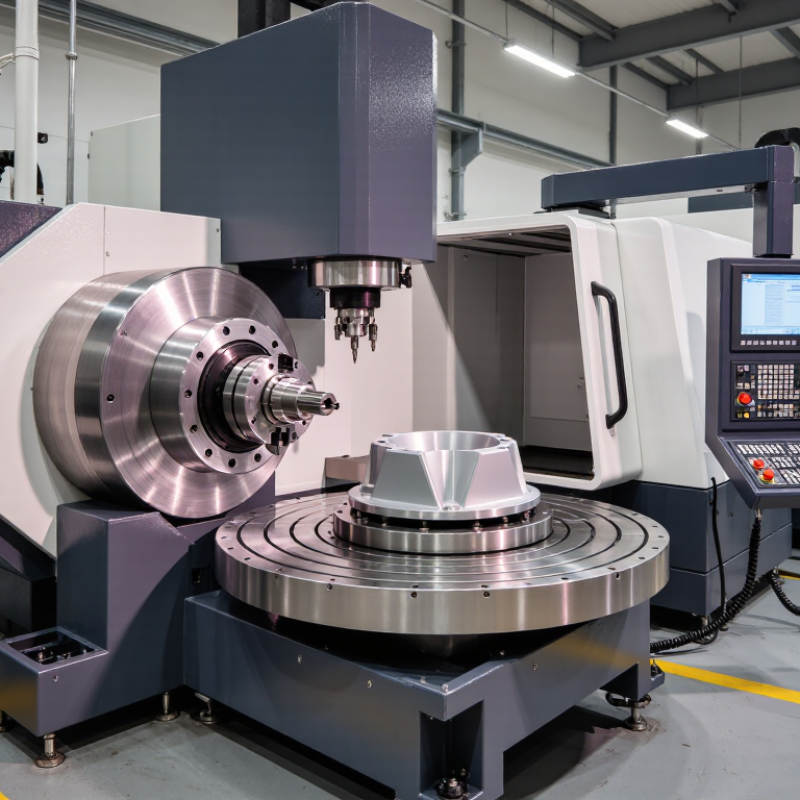
Why Choose a 4 Axis CNC Machining Center?
What Is a 4-Axis CNC Machining Center?
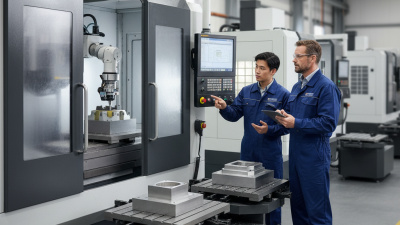
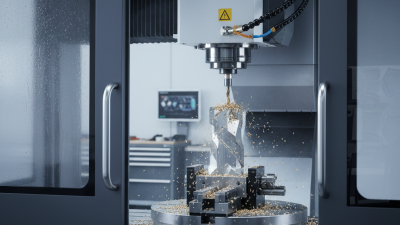
A 4-axis CNC machining center moves along the X, Y, and Z axes. It also rotates the workpiece around one additional axis, commonly called the A-axis. This rotary movement lets the machine reach several faces without removing the part.
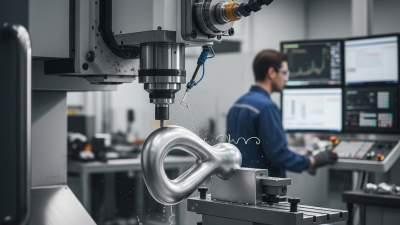
For example, a technician can secure an aluminum block once, then machine its front, side, and angled surfaces. Fewer setups can improve alignment and reduce handling time. It may also lower the risk of repeated zero-point errors. However, a 4-axis machine does not replace every 5-axis process. Complex curved surfaces may still require more simultaneous movement.
In daily production, the rotary axis is useful for indexing holes, cutting side features, and machining parts with repeated patterns. Experienced operators still check fixture clearance, tool length, and rotary balance before cutting. A small clearance mistake can damage both the tool and the workpiece. I have also found that faster programming is not guaranteed; poorly planned toolpaths can create extra movements.
Tip: Confirm the fourth-axis direction before programming. Run a dry cycle first. Leave enough clearance around clamps and fixtures. Measure the first part carefully, even when the setup seems familiar.
North of Industrial Road, Linqing Economic Development Zone,Liaocheng City, Shandong Province, China
info@lucimagnet.com
Angela:0086-13884742546
Eric: 0086-15688878114
Surface Grinder Machining Center CNC Lathe Machine Boring and Milling Machines
Semiconductor Optics Automobile Molding Construction Machinery Shipping Aerospace Valve Industry Wind Power Industry Abrasives Industry Refractory Industry Ceramic Seal Industry Bearings Industry
Company Patent Certificates Factory Tour Team Member Our Partner Our History Real-time Factory Inspection R&D Strength Terms & Conditions Privacy Statement


© 2025 Shandong Linmo CNC Machine tool Equipment Co.,Ltd. All Rights Reserved.