China Best 4 Axis CNC Machining Center Manufacturers
China has become a major sourcing destination for advanced metalworking equipment. This guide examines China’s best 4 Axis Cnc Machining Center manufacturers through practical, verifiable criteria. These criteria include machining accuracy, spindle performance, rotary-axis integration, factory experience, and after-sales support.
A 4 Axis Cnc Machining Center can machine several faces of a component with fewer setups. That difference matters. It can reduce alignment errors, shorten production time, and improve repeatability for aerospace, automotive, medical, and general engineering parts. Dr. Yoram Koren, a respected researcher in flexible manufacturing systems, stated, “Flexible automation is the future of manufacturing.” His observation explains why buyers increasingly evaluate flexibility, not only purchase price.
The strongest Chinese manufacturers usually provide clear machine specifications, sample-cutting records, installation guidance, and responsive technical service. Buyers should inspect control systems, table dimensions, rotary-axis accuracy, tool-changing speed, and actual tolerance results. ISO certification can support credibility, but it cannot replace an independent performance test. A polished brochure proves little.
This comparison will not pretend that one supplier fits every workshop. A high-speed spindle may suit aluminum production, while a rigid machine may better handle steel. Some manufacturers offer impressive machines but weak overseas support. That weakness is easy to overlook. Factory audits, customer references, video inspections, and trial machining can expose important differences. The following overview aims to help manufacturers choose more carefully, with evidence rather than exaggerated claims.
Types and Applications of 4-Axis CNC Machining Centers in China
China Best 4 Axis CNC Machining Center Manufacturers
Types and Applications of 4-Axis CNC Machining Centers in China
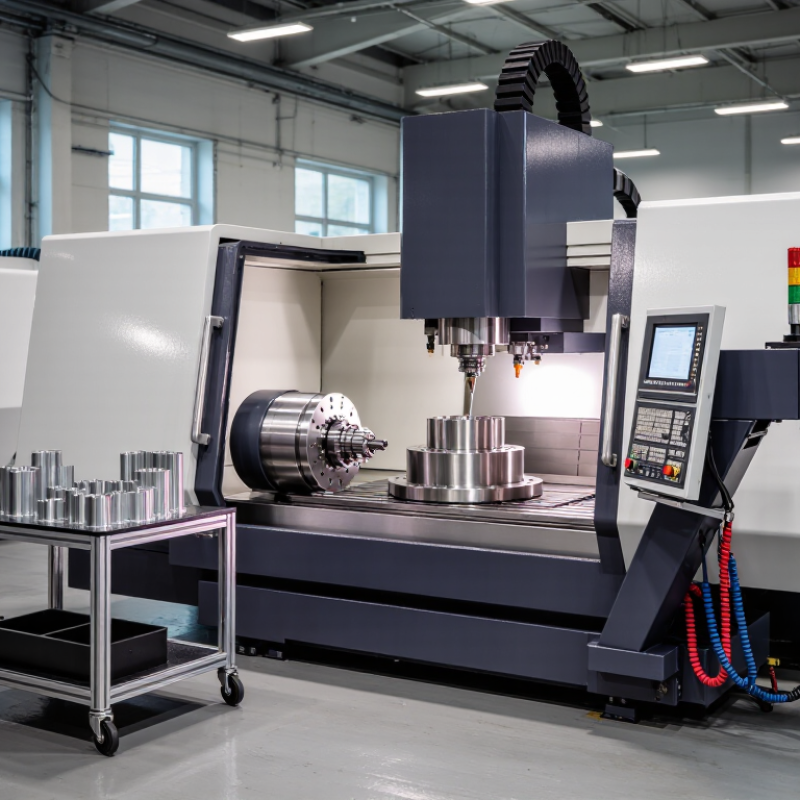
China’s four-axis CNC machining centers generally fall into two practical types: rotary-table machines and trunnion-table machines. Rotary tables suit long plates, housings, and indexed drilling. Trunnion systems handle compact parts from several angles. A 3+1 machine indexes the fourth axis, while a simultaneous four-axis machine moves it during cutting. That difference matters.
The machines serve aerospace fittings, automotive components, pump bodies, molds, and medical hardware. A rotary axis can expose four faces without repeated clamping. This reduces alignment errors around a drilled hole. In a busy workshop, that saves setup time. It also helps protect delicate surfaces from unnecessary handling. However, four axes do not automatically produce better parts. Poor workholding, weak post-processors, and incorrect tool offsets still create scrap.
Industry data supports the wider automation trend. Fortune Business Insights valued the global CNC machine market at about USD 86.83 billion in 2023. The International Federation of Robotics reported 276,288 industrial robot installations in China during 2023. These figures show strong manufacturing investment, but they do not prove every factory needs a four-axis center. Engineers should compare cycle time, tolerance, material, and batch size first. Sometimes a three-axis machine remains the more reliable choice. That is easy to overlook.
Leading China-Based 4-Axis CNC Machining Center Manufacturers
Leading China-based 4-Axis CNC Machining Center Manufacturers
China-based 4-axis CNC machining center manufacturers serve aerospace, automotive, medical, and precision tooling industries. Their machines combine three linear axes with a rotary axis. This setup reduces repositioning and improves production consistency. Leading manufacturers usually offer rigid castings, servo-driven tables, automatic tool changers, and responsive control systems.
A reliable supplier should provide clear spindle specifications, positioning accuracy, repeatability data, and realistic cycle-time estimates. Factory audits can reveal assembly discipline, calibration procedures, and spare-parts availability. Ask for sample machining results using aluminum, steel, or other materials relevant to your work. Cutting tests matter more than attractive brochures. Certifications, inspection records, and export experience also strengthen supplier credibility.
Not every low-cost machine delivers long-term value. That lesson is easy to miss. Some buyers focus on purchase price and overlook installation support, software training, or local service response. A strong Chinese manufacturer explains limitations instead of promising perfection. Communication may still require patience, especially when technical terms are translated poorly. Request drawings, acceptance standards, and video inspections before payment. Review maintenance access carefully; a crowded machine interior can slow routine service. Performance should be judged through evidence, not confident claims.
Manufacturing Standards, Technology, and Quality Control
China Best 4 Axis CNC Machining Center Manufacturers
Manufacturing Standards, Technology, and Quality Control
Reliable four-axis machining begins with documented manufacturing standards. Qualified manufacturers should operate under a controlled quality system, such as ISO 9001. Their procedures must cover material certificates, machine calibration, tool management, and final inspection. These records make production traceable from raw stock to shipped components.
In daily production, technology supports consistency rather than replacing skilled judgment. A fourth axis can machine multiple faces without repeated setups. This reduces alignment errors and shortens handling time. Probing systems check workpiece position before cutting begins. Offline programming helps verify toolpaths and prevent collisions. Temperature control also matters, especially during long aluminum or steel cycles. Small changes can affect hole location and surface finish.
Quality control should combine in-process checks with independent measurement. Operators may inspect critical dimensions using calibrated gauges. A coordinate measuring machine can verify profiles, angles, and positional tolerance. Statistical process monitoring reveals drift before rejected parts accumulate. Yet no process is perfect. A stable machine can still produce an unexpected burr or slight variation. That result deserves investigation, not excuses. Manufacturers should record corrective actions and confirm them with repeat samples. Clear inspection reports, realistic tolerances, and responsive communication build trust. Customers also need evidence, not confident promises.
China Best 4 Axis CNC Machining Center Manufacturers: Manufacturing Standards, Technology, and Quality Control
Representative, non-branded specification ranges for four-axis machining centers commonly published in technical datasheets.
Manufacturing Standards
Dimensional accuracy and repeatability are commonly verified using ISO 230-2 procedures, while machine-tool safety and electrical systems are assessed against applicable ISO and IEC requirements.
Technology Focus
Typical four-axis configurations combine three linear axes with a rotary axis, high-speed spindle systems, automatic tool changing, and CNC interpolation for complex components.
Quality Control
Key checks include geometric accuracy, spindle runout, rotary-axis indexing, positioning repeatability, cutting tests, and final inspection against engineering drawings.
How to Select the Best Chinese 4-Axis CNC Manufacturer
China Best 4 Axis CNC Machining Center Manufacturers
How to Select the Best Chinese 4-Axis CNC Manufacturer
Selecting a Chinese 4-axis CNC manufacturer requires more than comparing quotations. In practical machining reviews, I examine machine rigidity, rotary-axis accuracy, controller stability, and service response. Ask for test-cut videos and measured inspection reports. Better still, send a sample drawing with material, tolerance, and surface-finish requirements. A reliable supplier should explain its process clearly, not promise everything.
Visit the factory remotely or in person. Look for organized assembly areas, calibrated inspection tools, and traceable quality records. Ask how often technicians check spindle runout, table alignment, and rotary-axis backlash. Request evidence from a recent machine, including dimensional results and corrective actions. The details matter. A clean showroom alone proves little.
Evaluate engineering support after delivery. Confirm installation training, spare-part availability, software assistance, warranty terms, and response times in writing. Discuss production volume and difficult geometries before signing. An experienced manufacturer may identify limits in your design and suggest a better fixture or toolpath. That honesty is valuable. No supplier is perfect, and I would treat vague answers as a warning. My own review process can miss hidden costs, especially shipping, tooling, and operator training. Recheck them with a total-cost worksheet.